A lot of people know the story contained in W. P. Kinsella's book Shoeless Joe, either because they've read the book or have seen the movie based on it: Field of Dreams. A less-known but possibly even better book of Kinsella's is The Iowa Baseball Confederacy, about a man who devotes his life to proving (despite a lack of evidence or anyone else's recollection) that the Chicago Cubs played a bizarre exhibition game against a local Iowa team in 1908. I can relate to that guy, because I know of the existence of another Iowan thing that no one else remembers: a cow.
The Herbert Hoover Presidential Library and Museum just opened a new temporary exhibit about farming. One of the features is a fake cow that visitors can milk. Because my 6-year-old is a wee bit obsessed with cows right now (and because he also loves Iowa and Herbert Hoover), I'm definitely going to try to make it there.
But learning about this new exhibit also reminded me of another Hoover-cow experience, the one that has turned into a bit of a mystery.
Many, many years ago, just after graduating from high school, I set out with my mom on a long, meandering road trip from Ohio to California. Along the way we stopped at numerous roadside attractions and lots of museums, including presidential and presidential-ish sites.
After stops in Norwalk, Ohio; Terre Haute, Indiana (Eugene V. Debs' home); Michigan City, Indiana (no idea what we did there); Chicago (lots of things); and Galena, Illinois (Ulysses S. Grant's home); we finally headed into Iowa, where attractions like the Field of Dreams movie site awaited us. But our first stop was in West Branch for the Hoover Museum.
We went through the museum and then went outside to walk around the buildings that are part of the Herbert Hoover National Historic Site. I honestly don't remember much about the museum or the buildings, but what I remember very clearly is the cow.
There was a cow. It was along a path and behind a wooden fence. I don't recall there being any other animals, and I also don't recall there being any other people. It was kind of eerie. The cow was just hanging out, so I went over to it. It mooed at me and let me pet its nose. I'm pretty sure that was the first time I'd ever touched a cow (and, come to think of it, possibly the last).
There was definitely a cow.
We finished with the grounds, we went on to do lots of other things in Iowa and along the old Route 66, and I got to California and life went on.
I've been back to the Hoover site a few times now. When I first took my family, I recounted to my kids how I'd met a cow and hoped it was still there, but alas it wasn't.
So the other day when the Hoover Museum tweeted a picture of the fake cow, I asked them about the real cow that used to live there...but they have no recollection of its existence.
I have an excellent memory, but I started to wonder if maybe I'd seen the cow at a different presidential museum. We had gone to two others on the trip: Lyndon Johnson's and, I'm assuming, Eisenhower's. I say "assuming" because until a few months ago, I would have told you we'd gone to Truman's, but as I recently learned, we had not. The only other presidential museum along our route would have been Ike's. So it's possible the cow was there, and it's possible my memory isn't as good as I thought it was. But somewhere, there was a cow.
I eliminated the possibility of the LBJ museum because that was toward the end of our trip, and the cow was definitely earlier. The Eisenhower museum does appear to have a house on its grounds, and feasibly that's the one I remember seeing behind the cow. Could it have been an Eisenhower cow and not a Hoover cow? I asked the Ike Museum on social media, but they also don't remember a cow.
So now I don't know where the hell the cow was, but I know it existed, and I'm still pretty convinced it was at the Hoover Museum, but I'm leaving Ike open as a possibility.
If anyone else visited the Hoover or Eisenhower Museums in the mid-1990s and remembers there being a cow, please let me know. Or if you happen to work at the Hoover Library and Museum, Hoover National Historic Site, or Eisenhower Library and Museum and want to look into this more closely, I'd really appreciate it. Because it's driving me crazy.
Showing posts with label Hoover. Show all posts
Thursday, April 19, 2018
Friday, February 10, 2017
Herbert Hoover's Letters to Kids
A couple months ago I was listening to the Herbert Hoover episode of the DC Improv's "Headliner of State" podcast, a search for the funniest president of all time. The guest on that particular episode was Tom Schwartz, director of the Herbert Hoover Library and Museum.
Through most of the interview, Hoover came off seeming like a good humored person, but not necessarily a humorous person. Toward the end of the interview, though, there emerged a glimmer of Hoover's funnier side.
Almost as an afterthought Schwartz mentioned this book of correspondence with children that Hoover had published after he retired. One of the letters asked if he thought a woman would ever be president. Hoover responded, "As a generalization, the men have not done too good a job of government in the world in the last forty-seven years, and the chances for the women are thereby increased."
In another letter a child asked if Hoover had traveled much as president. He answered,
That's good stuff! That's funny!
I decided I needed a copy of this book, Herbert Hoover: On Growing Up.
As it happened, I had already been planning a trip to the Hoover Museum in West Branch, Iowa, because I needed to pick up the Hoover-themed 2016 White House Christmas Ornament, and why order it online when I can drive three hours to get it in person? I added the book to my shopping list.
A week or so later, my 5-year-old and I made the trip out to West Branch. Once we were done with the exhibits we headed to the gift shop where I eagerly perused the various books about Hoover, but I didn't see On Growing Up. I asked the woman working there if they have it, and not only did she say no, she seemed baffled that I'd even ask.
Maybe that's because when I looked it up on Amazon later that afternoon, I learned that On Growing Up was last printed in 1962. Luckily, though, I was able to snag a used copy in excellent condition for about $7 shipped.
When the book finally arrived, I was a bit underwhelmed. It's not a long book--around 150 pages, with a short letter or two on each page. However, it did serve as an interesting glimpse into Hoover's mind.
Most of these letters were sent and received well after Hoover had been president, so we're not talking about the Depression-era Hoover; we're talking about the Cold War-era Hoover. The letters serve as an excellent snapshot of America in the 1950s, especially with a chid's letter that actually uses both the words "golly" and "gee." Hoover talks a lot about Communism (specifically about avoiding it), but he also gets in some digs that show he was clearly still stinging from the way he was treated in re: the Depression.
It's not all politics, though. In fact, most of it isn't politics. One definitely gets the sense that Hoover felt wistful for his boyhood days, and stresses to children that they should focus more on having fun and getting a good education than on the problems of the world. While he sometimes comes across as "elder statesman imparting wisdom for the ages," he mostly comes across as "old guy next door who likes fishing." It's like this book could be titled Chicken Soup for the Cold War Child's Soul.
Although Hoover didn't have an easy childhood (he was orphaned at a young age and was sent to live with relatives on the other side of the country), he speaks with fondness about his early days in Iowa: sledding, doing chores on the farm, etc. We also learn some interesting random facts, like how his childhood idol was Abraham Lincoln.
In order to maintain the innocence of childhood, Hoover is vehemently opposed to children learning "Social Studies," although he does believe in the value of geography and learning about other presidents. In many letters, children ask about some pressing world issue, and Hoover basically tells them to go play baseball and leave the problems to adults. In some instances, though, he gives rather detailed answers.
An eighth-grader named Mary Lou asked for Hoover's opinions on military censorship, federal aid to education, and socialized medicine. Hoover responded that some amount of military censorship is necessary for national security; that the federal government should build schools in poor areas but should not pay teachers' salaries because once they get involved financially, eventually the federal government will tell local schools what to teach; and that socialism is bad and leads to dictatorships and a loss of freedom. Some debates never change.
Also, for a guy who thinks kids shouldn't worry about grown-up problems, he nonetheless (inadvertently, I'm sure) plants seeds of concerns, like with the kid who said, "Today the big problem is the Atom and Space." Hoover replied, "I do not agree that the whole problem today concerns the atom bomb and space. Those are only parts of a larger problem--the determination of the Communists to rule the world." I'm sure Linda slept a lot better after that.
As it turns out, the two examples cited in the podcast were probably the funniest responses Hoover gave, but there were some other decent ones. In one response, he talks about the time a professional autograph-hunter asked him for three autographs. When Hoover inquired why, he was told, "It takes two of yours to get one of Babe Ruth."
There's also the 1919 response in which he lists the family pets, including two dogs, 11 goldfish, three frogs, and "1,000,000 mosquitoes."
A girl named Kathleen writes that although most children want to be president, she wants to be a doctor. Hoover responds, "I am glad you want to be a doctor and not President. We do not have enough doctors, and there seems to be a sufficient number of candidates for President."
The funniest part of the book might have come from one of the children writing to Hoover. A boy named Michael addressed his letter to the "Walled Off Hotel." (Hoover spent his last years living at the Waldorf Astoria in New York.)
On Growing Up offers a unique and approachable look at Hoover's life in general, but it also gives a taste of a changing America. It's definitely worth a read for anyone interested in mid-20th-century politics and culture.
Through most of the interview, Hoover came off seeming like a good humored person, but not necessarily a humorous person. Toward the end of the interview, though, there emerged a glimmer of Hoover's funnier side.
Almost as an afterthought Schwartz mentioned this book of correspondence with children that Hoover had published after he retired. One of the letters asked if he thought a woman would ever be president. Hoover responded, "As a generalization, the men have not done too good a job of government in the world in the last forty-seven years, and the chances for the women are thereby increased."
In another letter a child asked if Hoover had traveled much as president. He answered,
Presidents must travel in order to learn what the people have in mind and to explain their policies.
However, travel has improved for Presidents. George Washington required five or six days to go with horses from New York to Washington. Presidents today can do it now in one hour by jet. But jets go over the heads of people--like some of the speeches.
That's good stuff! That's funny!
I decided I needed a copy of this book, Herbert Hoover: On Growing Up.
As it happened, I had already been planning a trip to the Hoover Museum in West Branch, Iowa, because I needed to pick up the Hoover-themed 2016 White House Christmas Ornament, and why order it online when I can drive three hours to get it in person? I added the book to my shopping list.
A week or so later, my 5-year-old and I made the trip out to West Branch. Once we were done with the exhibits we headed to the gift shop where I eagerly perused the various books about Hoover, but I didn't see On Growing Up. I asked the woman working there if they have it, and not only did she say no, she seemed baffled that I'd even ask.
Maybe that's because when I looked it up on Amazon later that afternoon, I learned that On Growing Up was last printed in 1962. Luckily, though, I was able to snag a used copy in excellent condition for about $7 shipped.
When the book finally arrived, I was a bit underwhelmed. It's not a long book--around 150 pages, with a short letter or two on each page. However, it did serve as an interesting glimpse into Hoover's mind.
Most of these letters were sent and received well after Hoover had been president, so we're not talking about the Depression-era Hoover; we're talking about the Cold War-era Hoover. The letters serve as an excellent snapshot of America in the 1950s, especially with a chid's letter that actually uses both the words "golly" and "gee." Hoover talks a lot about Communism (specifically about avoiding it), but he also gets in some digs that show he was clearly still stinging from the way he was treated in re: the Depression.
It's not all politics, though. In fact, most of it isn't politics. One definitely gets the sense that Hoover felt wistful for his boyhood days, and stresses to children that they should focus more on having fun and getting a good education than on the problems of the world. While he sometimes comes across as "elder statesman imparting wisdom for the ages," he mostly comes across as "old guy next door who likes fishing." It's like this book could be titled Chicken Soup for the Cold War Child's Soul.
Although Hoover didn't have an easy childhood (he was orphaned at a young age and was sent to live with relatives on the other side of the country), he speaks with fondness about his early days in Iowa: sledding, doing chores on the farm, etc. We also learn some interesting random facts, like how his childhood idol was Abraham Lincoln.
In order to maintain the innocence of childhood, Hoover is vehemently opposed to children learning "Social Studies," although he does believe in the value of geography and learning about other presidents. In many letters, children ask about some pressing world issue, and Hoover basically tells them to go play baseball and leave the problems to adults. In some instances, though, he gives rather detailed answers.
An eighth-grader named Mary Lou asked for Hoover's opinions on military censorship, federal aid to education, and socialized medicine. Hoover responded that some amount of military censorship is necessary for national security; that the federal government should build schools in poor areas but should not pay teachers' salaries because once they get involved financially, eventually the federal government will tell local schools what to teach; and that socialism is bad and leads to dictatorships and a loss of freedom. Some debates never change.
Also, for a guy who thinks kids shouldn't worry about grown-up problems, he nonetheless (inadvertently, I'm sure) plants seeds of concerns, like with the kid who said, "Today the big problem is the Atom and Space." Hoover replied, "I do not agree that the whole problem today concerns the atom bomb and space. Those are only parts of a larger problem--the determination of the Communists to rule the world." I'm sure Linda slept a lot better after that.
As it turns out, the two examples cited in the podcast were probably the funniest responses Hoover gave, but there were some other decent ones. In one response, he talks about the time a professional autograph-hunter asked him for three autographs. When Hoover inquired why, he was told, "It takes two of yours to get one of Babe Ruth."
There's also the 1919 response in which he lists the family pets, including two dogs, 11 goldfish, three frogs, and "1,000,000 mosquitoes."
A girl named Kathleen writes that although most children want to be president, she wants to be a doctor. Hoover responds, "I am glad you want to be a doctor and not President. We do not have enough doctors, and there seems to be a sufficient number of candidates for President."
The funniest part of the book might have come from one of the children writing to Hoover. A boy named Michael addressed his letter to the "Walled Off Hotel." (Hoover spent his last years living at the Waldorf Astoria in New York.)
On Growing Up offers a unique and approachable look at Hoover's life in general, but it also gives a taste of a changing America. It's definitely worth a read for anyone interested in mid-20th-century politics and culture.
Monday, June 6, 2016
DIY Presidential T-Shirts
A couple months ago I mentioned that my cousin and I are going to start playing Hooverball this summer. It goes without saying that no amateur Hooverball scrimmage is complete without thematic t-shirts, so I got to work.
In less than an hour, I had made two matching-ish shirts for us using freezer paper stencils. This is a really easy way to make t-shirts for all your presidential sporting events or other special occasions. When you iron on the paper, it forms a seal with the shirt, allowing you to paint away. When you're done, it easily peels off. It's really very cool.
Here's what you need:
While googling, I found a neat posterized Herbert Hoover image that would be perfect for stenciling. Since I knew I was going to write a post about it, though, I didn't want to use that particular image since it's probably copyrighted. Instead, I decided to use the same public domain image and posterize it myself.
So I took this photo:
Cropped it, plugged it into my PhotoStudio app, selected the "posterize" effect, and got exactly the image I wanted:
Okay, not exactly the image I wanted, since this one has devil horns and a big splotch on his neck, but no big deal: I didn't trace them, so they didn't end up in the final product. I also decided to go with a round border so it looks like a ball. A ball of Hoover. A Hooverball...
Anyway, once you have the image you want, you can paste it into your word processing program of choice, resize it to the size you want, then print it out. Then it's time to trace the image onto freezer paper.
First, a Very Important Thing: There are two sides to freezer paper: a shiny side and a matte side. You want the shiny side down (this will eventually adhere to your shirt) and the matte side up. Make sure you're tracing onto the matte side. You can use a regular pen for this. (For some reason I used a Sharpie, and in retrospect I should have used a thinner one. X-acto knife blades are very thin and my lines were thick, so I kept finding myself wondering whether I should cut on the inside or outside of the line. Don't complicate things for yourself.)
The tracing step is probably a lot easier with a light box, but I don't have one. If you're having trouble making out the lines of your printed image through your freezer paper, you might want make the lines bolder by going over them with a Sharpie before you trace it onto the freezer paper. That often adds enough boldness and contract to be able to see the lines easily. I've also read about people tracing directly from their computer screen. That idea makes me nervous, but it's sort of brilliant.
When you're done tracing, your stencil might look weird, and you might be questioning your decision to do this, but stick with it.
Once the image is traced, it's time to cut. Here is another Very Important Thing: Don't throw away any of your cut pieces until you're sure you won't need them! Anything you iron down will be the same color as your fabric. Any "holes" will be the color of your paint. Make sure to add/keep a border if you need one so your paint has a clean edge. If your image has any "islands" that need to be cut out, make sure you keep the right part (the island or the border) so you can iron them on later. Also, even if there's a part you won't need, it can help to hang onto it for aid in positioning things later on.
The cutting stage is where the "simplicity" of an image really comes in handy. Complex images can be done, but you'll spend a lot of time cutting. (I made some shirts once with scenes from Steamboat Willie, and I think each one took half an hour---and a hand cramp--to cut out. Hoover took a couple minutes.)
All right, now it's time to iron! Make sure you've washed and dried your shirt first to ensure it won't shrink later. You'll also want to iron out any wrinkles so you have a nice smooth surface to work with.
Take your stencil and position it how you want. Then go ahead and iron it on! Use the high setting and press down for about 10 seconds. Be sure the edges are well sealed! If you have more than one piece to iron, you can do them one at a time if you need to.
Now it's time to paint! (Another Very Important Thing: Put something between the layers of your shirt to keep the paint from seeping through. Cardboard will give you a nice firm surface underneath. I couldn't find cardboard so I just used another piece of freezer paper.) I squirted my paint onto a paper plate, then used my sponge brush to dab away. Just get the paint on there, and don't be afraid to get it on the freezer paper--it won't bleed through.
After a few minutes if it looks like you need another layer of paint, go ahead and add it.
At this point it might look even weirder and you might be sure this was a bad idea, but it's not. I've made several freezer-paper shirts and haven't had a dud yet. I'll admit I did start to worry when this image of Hoover made him look like a demon who has come back to haunt the earth (note to self: write screenplay), but I still had faith that it would work.
Once you've painted it's time to wait...but not too long. All the other freezer paper tutorials I've read say to let the paint dry (usually several hours) before peeling off the paper. The problem with this is that if the paint dries onto the shirt and the paper, peeling the paper off is likely to take out chunks of the shirt-paint, too. Since I don't want the paint to come off my shirt, and because I like living on the edge, I peel the paper off while the paint is still wet. I know. But trust me. (It helps if you can have someone else hold the shirt down while you peel off the freezer paper. Also, the X-Acto knife or some tweezers can help gently lift up edges or peel off tiny parts.)
After that, you really do need to wait for the paint to dry before you do anything else. Go away for a few hours or overnight. Once the paint is dry, you can put a clean cloth over it and iron it to "heat set" the paint. (I don't really know how necessary this step is, but other people say to do it, so I do.)
And there you have it!
The one Hoover looks a little more Hoover-y than the other, probably because for one shirt I traced my image onto the paper, and for the other I traced the tracing rather than the image itself. It might also have to do with inconsistent cutting along my thick Sharpie lines. But whatever. I'm happy with them.
Like I said, you can use this method for more than just presidents. Here are some shirts I've made for an upcoming trip to Disney World:
(That Lion King shirt is one of my favorite things I've ever made. I got the idea from here.)
And here are the Steamboat Willie ones I mentioned:
If you're feeling really ambitious, you could do, like, a scene from JFK's inauguration or Teddy Roosevelt charging up San Juan Hill. Make sure you share if you do.
In less than an hour, I had made two matching-ish shirts for us using freezer paper stencils. This is a really easy way to make t-shirts for all your presidential sporting events or other special occasions. When you iron on the paper, it forms a seal with the shirt, allowing you to paint away. When you're done, it easily peels off. It's really very cool.
Here's what you need:
- A t-shirt (duh) or some other fabric item, preferably cotton or at least something that can be ironed
- Freezer paper. You can find this in the foil aisle of your grocery store. (Make sure it's freezer paper! Not parchment paper, not wax paper.)
- Fabric paint. (I used Tulip Soft Fabric Paint. Don't use puff paint unless you're going for a George Bush shirt and want it to look authentically like something from the early '90s.)
- An applicator for each color---preferably sponge brushes. I used the Tulip Sponge "Pouncers."
- A Sharpie and/or pen
- An X-acto knife
- An iron
- Some kind of image to copy, which might require a computer and printer
While googling, I found a neat posterized Herbert Hoover image that would be perfect for stenciling. Since I knew I was going to write a post about it, though, I didn't want to use that particular image since it's probably copyrighted. Instead, I decided to use the same public domain image and posterize it myself.
So I took this photo:
Cropped it, plugged it into my PhotoStudio app, selected the "posterize" effect, and got exactly the image I wanted:
Okay, not exactly the image I wanted, since this one has devil horns and a big splotch on his neck, but no big deal: I didn't trace them, so they didn't end up in the final product. I also decided to go with a round border so it looks like a ball. A ball of Hoover. A Hooverball...
Anyway, once you have the image you want, you can paste it into your word processing program of choice, resize it to the size you want, then print it out. Then it's time to trace the image onto freezer paper.
First, a Very Important Thing: There are two sides to freezer paper: a shiny side and a matte side. You want the shiny side down (this will eventually adhere to your shirt) and the matte side up. Make sure you're tracing onto the matte side. You can use a regular pen for this. (For some reason I used a Sharpie, and in retrospect I should have used a thinner one. X-acto knife blades are very thin and my lines were thick, so I kept finding myself wondering whether I should cut on the inside or outside of the line. Don't complicate things for yourself.)
The tracing step is probably a lot easier with a light box, but I don't have one. If you're having trouble making out the lines of your printed image through your freezer paper, you might want make the lines bolder by going over them with a Sharpie before you trace it onto the freezer paper. That often adds enough boldness and contract to be able to see the lines easily. I've also read about people tracing directly from their computer screen. That idea makes me nervous, but it's sort of brilliant.
When you're done tracing, your stencil might look weird, and you might be questioning your decision to do this, but stick with it.
Once the image is traced, it's time to cut. Here is another Very Important Thing: Don't throw away any of your cut pieces until you're sure you won't need them! Anything you iron down will be the same color as your fabric. Any "holes" will be the color of your paint. Make sure to add/keep a border if you need one so your paint has a clean edge. If your image has any "islands" that need to be cut out, make sure you keep the right part (the island or the border) so you can iron them on later. Also, even if there's a part you won't need, it can help to hang onto it for aid in positioning things later on.
The cutting stage is where the "simplicity" of an image really comes in handy. Complex images can be done, but you'll spend a lot of time cutting. (I made some shirts once with scenes from Steamboat Willie, and I think each one took half an hour---and a hand cramp--to cut out. Hoover took a couple minutes.)
All right, now it's time to iron! Make sure you've washed and dried your shirt first to ensure it won't shrink later. You'll also want to iron out any wrinkles so you have a nice smooth surface to work with.
Take your stencil and position it how you want. Then go ahead and iron it on! Use the high setting and press down for about 10 seconds. Be sure the edges are well sealed! If you have more than one piece to iron, you can do them one at a time if you need to.
Now it's time to paint! (Another Very Important Thing: Put something between the layers of your shirt to keep the paint from seeping through. Cardboard will give you a nice firm surface underneath. I couldn't find cardboard so I just used another piece of freezer paper.) I squirted my paint onto a paper plate, then used my sponge brush to dab away. Just get the paint on there, and don't be afraid to get it on the freezer paper--it won't bleed through.
After a few minutes if it looks like you need another layer of paint, go ahead and add it.
At this point it might look even weirder and you might be sure this was a bad idea, but it's not. I've made several freezer-paper shirts and haven't had a dud yet. I'll admit I did start to worry when this image of Hoover made him look like a demon who has come back to haunt the earth (note to self: write screenplay), but I still had faith that it would work.
Once you've painted it's time to wait...but not too long. All the other freezer paper tutorials I've read say to let the paint dry (usually several hours) before peeling off the paper. The problem with this is that if the paint dries onto the shirt and the paper, peeling the paper off is likely to take out chunks of the shirt-paint, too. Since I don't want the paint to come off my shirt, and because I like living on the edge, I peel the paper off while the paint is still wet. I know. But trust me. (It helps if you can have someone else hold the shirt down while you peel off the freezer paper. Also, the X-Acto knife or some tweezers can help gently lift up edges or peel off tiny parts.)
After that, you really do need to wait for the paint to dry before you do anything else. Go away for a few hours or overnight. Once the paint is dry, you can put a clean cloth over it and iron it to "heat set" the paint. (I don't really know how necessary this step is, but other people say to do it, so I do.)
And there you have it!
The one Hoover looks a little more Hoover-y than the other, probably because for one shirt I traced my image onto the paper, and for the other I traced the tracing rather than the image itself. It might also have to do with inconsistent cutting along my thick Sharpie lines. But whatever. I'm happy with them.
Like I said, you can use this method for more than just presidents. Here are some shirts I've made for an upcoming trip to Disney World:
(That Lion King shirt is one of my favorite things I've ever made. I got the idea from here.)
And here are the Steamboat Willie ones I mentioned:
If you're feeling really ambitious, you could do, like, a scene from JFK's inauguration or Teddy Roosevelt charging up San Juan Hill. Make sure you share if you do.
Thursday, March 10, 2016
Hooverball
![]() |
| Hoover with his eponymous ball. National Archives |
I had heard the term "Hooverball" before, but I didn't really know the details until I looked into it a couple weeks ago. (There was probably information about it at the Hoover Presidential Library and Museum, but we were in a hurry when we visited and must have inadvertently skipped over it.)
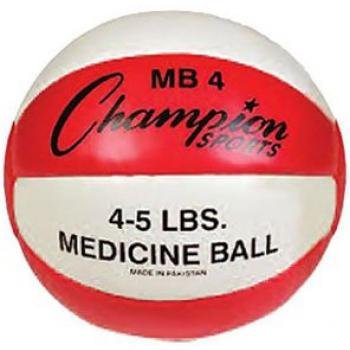
Basically Herbert Hoover's doctor, Joel T. Boone, was looking for a way to get the president into better shape. Throwing around a medicine ball is a great way to do that, but it's also boring...unless you make it competitive. So Boone created a three-way lovechild between medicine-ball-throwing, tennis, and volleyball. The result was Hooverball.
The playing surface is the size of a tennis court, with an 8-foot-tall volleyball net dividing the sides. Teams of two to four players follow the rules of tennis rules in terms of serving, returning, and scoring. The main difference is that instead of hitting a small fuzzy ball with a racket, players catch and release a 6-pound medicine ball. You can find the full rules here.
Hoover and various government employees would play Hooverball every morning on the White House lawn. They would assemble at 7 a.m. and play until the whistle of a nearby factory blew at 7:30. They were serious about this, too: Except for Sundays they played every morning (even holidays), sun, rain, sleet, snow, or hail. On the rare occasions the weather was too bad, they played in the White House gym.
![]() |
| National Archives |
Now, I'm not big on exercising. I go through phases where I'll force myself to sweat through exercise videos for a few weeks at a time, and I was almost successful in taking up running last year, but organized sports have never been my thing. I want to give Hooverball a try, though. In fact, I need to give Hooverball a try, but not with Crossfit people because they're intimidating and I'm weak.
That's why this summer I'm enlisting my cousin Christina to play Hooverball with me using a ball and a badminton net in my back yard. She's actually pretty fit and runs a lot and lifts weights (she blogs about it), so she'll probably kick my ass, but that's okay.
I need ideas for team names in case I decide to make us t-shirts. (To be honest, I'm a lot more likely to make t-shirts than to take up Hooverball on a regular basis.) If you have ideas for some Herbert-Hoover-inspired names, suggest them below, on the Presidentress Facebook page, or on Twitter.
I'll update in a few months once we've played our first match.
Sunday, June 7, 2015
Separated at Birth, part 4
In honor of last week's visit to the Herbert Hoover Presidential Museum, it's Herbert Hoover and Orson Welles:
Saturday, June 6, 2015
Hoover with a Side of Reagan
A few months ago we passed through West Branch, Iowa, on our way to California. I wanted to stop at the Herbert Hoover National Historic Site, but it was -14 that day, and the site includes several small buildings located outdoors. Instead I decided it would make a great day trip sometime when the weather was warmer, and that's how we ended up there a couple days ago.
The site consists of a visitor's center, a museum, Hoover's birthplace cottage, a blacksmith shop like the one his father had, a Quaker/Friends meetinghouse, a schoolhouse, a statue of Isis, a tallgrass prairie, and his (and First Lady Lou's) gravesite. The only building that requires a fee is the museum, which was the least exciting part for the kids, but we dragged them to it anyway.
The site has a Junior Ranger program, which we're big fans of at National Parks and Sites. Kids visit different parts of the complex and complete activities in a booklet. When they're done they're named Junior Park Rangers and receive a badge and/or patch. (In the case of the Hoover site, they received both! They also got nice full-sized Hoover pencils, a nice change from the tiny golf pencils we've gotten at other National Parks.)
We were there on a Thursday before school let out, so we had the entire place almost entirely to ourselves. Other than employees, I think we spotted five other people the whole time.
I had been to the museum once before, but that was 20 years ago so it was nice to "catch up" with Herbert again.
Most people think of him (if they think of him at all) as the guy who caused the Great Depression, but it wasn't his fault; he's just the one who got stuck holding the bag. Historians can debate for hours whether Hoover did enough to help fix the problem, whether his policies (which involved indirect aid rather than direct funding) would have eventually worked, whether FDR's policies are what saved the county, whether they made things worse, whether he just got "lucky," etc. But regardless, Hoover is often unfairly demonized as uncaring when nothing could be further from the truth. He was a lifelong humanitarian who cared deeply about people within the country and abroad.
We didn't have as much time at the museum as I would have liked. We spent a long time exploring the other buildings beforehand, plus our arrival in West Branch had been delayed by at least an hour due to a major crash that shut down Interstate 80. We did get to absorb most of it, though.
On the way back we needed to stop for dinner so we pulled off in Dixon, Illinois, location of Ronald Reagan's boyhood home. We had dinner then drove by the house. It was too late to go in, but we took a couple pictures of the outside and also snapped a few pics with the statue of Reagan holding a handful of corn.
We hadn't intended to see two presidential houses that day, but it worked out well. (One of the benefits of living in the Midwest is that there are many presidential sites within a day's drive. I hope to hit several more this summer.)
The site consists of a visitor's center, a museum, Hoover's birthplace cottage, a blacksmith shop like the one his father had, a Quaker/Friends meetinghouse, a schoolhouse, a statue of Isis, a tallgrass prairie, and his (and First Lady Lou's) gravesite. The only building that requires a fee is the museum, which was the least exciting part for the kids, but we dragged them to it anyway.
The site has a Junior Ranger program, which we're big fans of at National Parks and Sites. Kids visit different parts of the complex and complete activities in a booklet. When they're done they're named Junior Park Rangers and receive a badge and/or patch. (In the case of the Hoover site, they received both! They also got nice full-sized Hoover pencils, a nice change from the tiny golf pencils we've gotten at other National Parks.)
We were there on a Thursday before school let out, so we had the entire place almost entirely to ourselves. Other than employees, I think we spotted five other people the whole time.
I had been to the museum once before, but that was 20 years ago so it was nice to "catch up" with Herbert again.
Most people think of him (if they think of him at all) as the guy who caused the Great Depression, but it wasn't his fault; he's just the one who got stuck holding the bag. Historians can debate for hours whether Hoover did enough to help fix the problem, whether his policies (which involved indirect aid rather than direct funding) would have eventually worked, whether FDR's policies are what saved the county, whether they made things worse, whether he just got "lucky," etc. But regardless, Hoover is often unfairly demonized as uncaring when nothing could be further from the truth. He was a lifelong humanitarian who cared deeply about people within the country and abroad.
We didn't have as much time at the museum as I would have liked. We spent a long time exploring the other buildings beforehand, plus our arrival in West Branch had been delayed by at least an hour due to a major crash that shut down Interstate 80. We did get to absorb most of it, though.
On the way back we needed to stop for dinner so we pulled off in Dixon, Illinois, location of Ronald Reagan's boyhood home. We had dinner then drove by the house. It was too late to go in, but we took a couple pictures of the outside and also snapped a few pics with the statue of Reagan holding a handful of corn.
We hadn't intended to see two presidential houses that day, but it worked out well. (One of the benefits of living in the Midwest is that there are many presidential sites within a day's drive. I hope to hit several more this summer.)
Subscribe to:
Posts (Atom)